
Limited mobility, arthritis and age: sex without straining your joints
Arthritis, joint pain, a new joint replacement or the years change how the body moves, not your right to pleasure. Here is how to prepare your body so it hurts less, when to resume sex after a hip or knee replacement, how to use pillows, chairs and the edge of the bed, and which positions put the least load on your joints.
Arthritis, pain and desire: what changes
Pain, stiffness and fatigue dampen desire and make some positions impossible. This is very common: the American Association of Hip and Knee Surgeons (AAHKS) reports that 75% of people with hip arthritis pain had seen their sex life interrupted or stopped altogether. The Arthritis Foundation cites a 2014 study in which more than half of people with rheumatoid arthritis said the disease had reduced their interest in sex.
What changes is rarely whether you can, but how. Four ideas help: shift the weight onto the bed, a chair or pillows; choose positions in which the painful joint neither bears weight nor bends fully; mix in caressing, massage or manual stimulation, which can be just as satisfying; and talk about what hurts and what does not. Some medicines, such as steroids, can lower desire: raise it with your doctor before changing anything. If your back hurts too, see our article on sex with low back pain.
Before sex: five adjustments to reduce pain
- Choose the time of day. Many people are stiffer when they wake up and more tired at night; the Arthritis Foundation suggests trying the afternoon. Make the most of good days.
- Pain relief beforehand. Take the painkiller you are already prescribed about 30 minutes (Arthritis Foundation) or an hour beforehand (Arthritis UK, formerly Versus Arthritis). It is less spontaneous, but it buys you time. Do not change the dose on your own.
- Warmth. A warm bath or shower beforehand loosens stiff joints, and you can share it.
- Lubricant. Age, the menopause and some medicines cause dryness; lubricant prevents friction that adds to the pain. See how to choose a personal lubricant.
- Position and breaks. If a position loads a joint, switch to another. Agree on a signal to stop or rearrange the pillows without having to explain.
After a hip or knee replacement
Surgery often improves your sex life because it removes the pain that was holding it back. The timings in the table are a guide only: your surgical team decides, as they know the approach used and how you are recovering.
| Situation | When to resume (guide) | What to avoid at first |
|---|---|---|
| Hip replacement | From around 6-8 weeks, according to the Irish health service (HSE); the AAHKS says 1 to 3 months. | Bending the hip beyond 90°, crossing your legs or moving one leg across the other, twisting the hip and kneeling. Arthritis UK advises avoiding these movements for at least 12 weeks. |
| Knee replacement | From around 6 weeks; in a study cited by the AAHKS, the average was about two months. | Kneeling for the first 6 weeks and putting your weight on the operated knee. |
| Shoulder or elbow replacement | Ask your team. | Forceful arm movements or movements behind the back, and putting your body weight through your arms. |
Why the hip needs extra care: a motion-capture study (Charbonnier and colleagues, Journal of Arthroplasty, 2014) analysed 12 common positions. In the women studied, the four that required bending the hip beyond 95° made the implant impinge, which is linked to posterior dislocation; in the men, one position combining turning the leg outwards by more than 40° with extending it and bringing it towards the other leg was linked to anterior instability. Dislocation happens in 1-2% of hip replacements, according to the AAHKS. The usual advice is for the person with the new hip to lie on their back, legs only slightly bent, with their partner on top.
Pillows, wedges, chairs and the edge of the bed: how to use them
Supports let a piece of furniture carry the weight instead of a sore knee, wrist or hip. You do not need anything special: firm pillows, rolled-up towels and a stable chair are enough.
- Pillow under the buttocks or pelvis: raises the person lying on their back by a few centimetres, so they do not have to lift their hips or hold their legs in the air.
- Pillow under the knees: when lying on your back, it keeps the knees slightly bent without effort and takes pressure off the lower back.
- Pillow between the knees: when lying on your side, it keeps the hips aligned and stops the upper leg crossing over the other, one of the movements to avoid after a hip replacement.
- Firm foam wedges: more stable than pillows. Use them as a backrest to sit half-upright or to raise the pelvis without sinking.
- Sturdy chair: no wheels, with feet flat on the floor. If you have a recent hip replacement, the seat should be high enough for the hip to stay above the knee so it does not bend beyond 90°. Armrests help you get up.
- Edge of the bed: the receiving partner lies with their buttocks at the edge and feet on the floor or a stool; the other partner stands or sits on a low chair, without kneeling or loading their wrists.
- Surface and grips: a firm mattress sinks less than a soft one. A headboard or bed rail gives you somewhere to put your hands to change position without pushing through the painful joint.
Change supports halfway through if pain starts: there is no need to hold a position to the end.
Sexuality after 60
Age does not switch off your sex life; health matters more than years. In the NSHAP study (Lindau and colleagues, New England Journal of Medicine, 2007), which surveyed 3,005 people aged 57 to 85 in the United States, 73% of those aged 57-64, 53% of those aged 65-74 and 26% of those aged 75-85 had been sexually active in the previous year. Among sexually active people aged 75-85, 54% had sex at least two or three times a month.
Almost half of sexually active people had at least one bothersome problem: low desire (43% of women), vaginal dryness (39%) or erection difficulties (37% of men). Even so, only 38% of men and 22% of women had discussed sex with a doctor since the age of 50. It is worth doing: many of these difficulties can be treated. Find more in sex education in later life, sexuality during the menopause and our article on spontaneous and responsive desire, which explains why, over the years, desire often shows up once touching has begun.
When to seek help
- Go to A&E if, with a hip replacement, you feel sudden, severe pain in the hip or groin, a clunk, or your leg looks shorter or turned, or you cannot put weight on it: it may be a dislocation.
- If the operated joint becomes swollen, hot or red, or you have a fever.
- If you have chest pain, shortness of breath or dizziness during sex: stop and get help.
- If the pain is genital or pelvic and keeps coming back: causes and treatments are in our guide to pelvic health and pain.
- If you think a medicine is lowering your desire or affecting erections: talk to your doctor and do not stop it on your own.
- If pain is making you both avoid physical contact: physiotherapy, occupational therapy or a sex therapist can help.
Positions that put less load on your joints
Chosen by need, all low effort. Adapt them with pillows and, if you have a recent joint replacement, follow your surgical team's advice first.
On your side, no weight on knees or wrists

The SpoonBajo
Nobody holds their weight on their arms or knees. A pillow between the receiving partner's knees keeps the hip aligned.

The Half Moon EncounterBajo
Side by side and face to face, the mattress takes the weight and movements stay short. Useful with knee, hand or wrist arthritis.
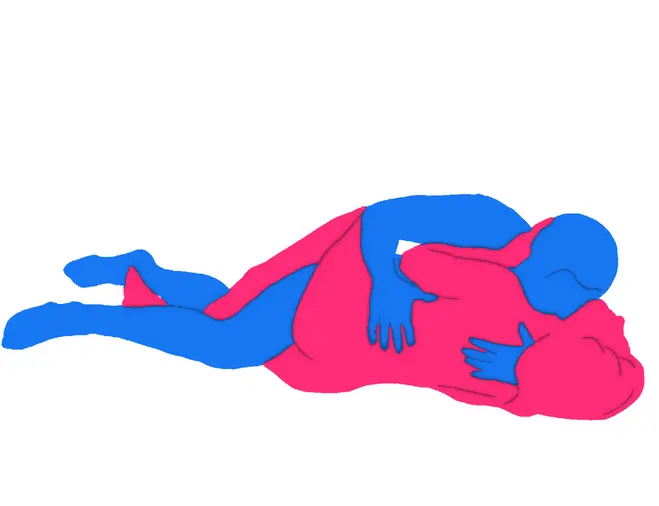
Deep LongingBajo
A side-lying embrace with little range of movement: you can pause or switch the supporting leg without breaking the position.
On your back, legs only slightly bent

The MissionaryBajo
The partner with hip or knee pain lies on their back, a pillow under the buttocks or knees. It is the one usually suggested after a hip replacement.
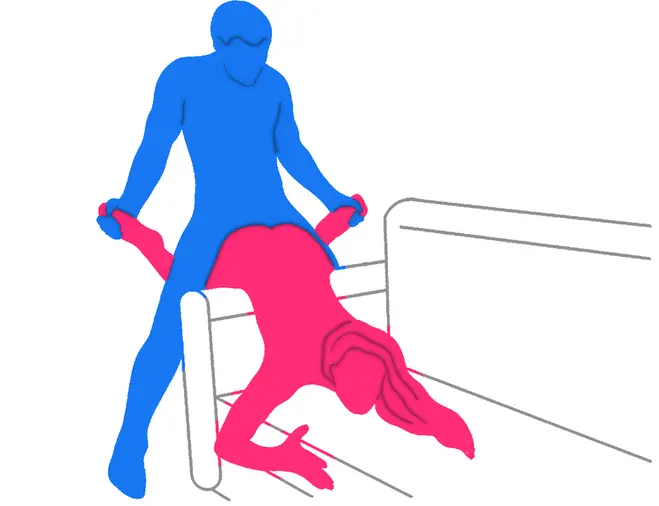
The Cobra (Embracing Hug)Bajo
The receiving partner's legs stay almost straight and the movement is a short rocking, without bending the hip much.
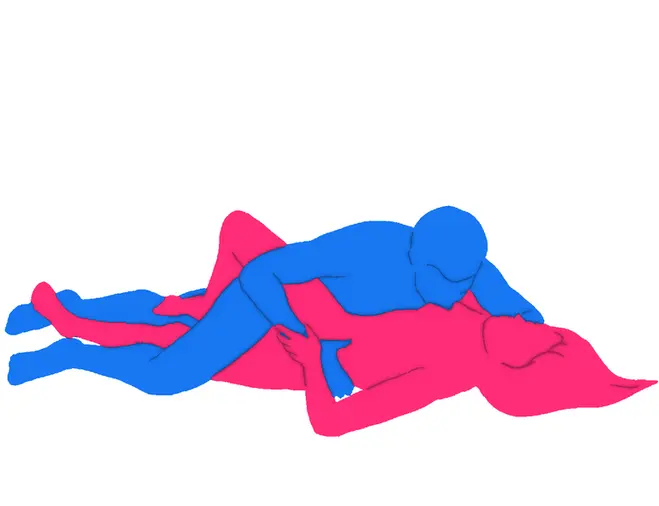
The Lightning BoltBajo
The diagonal angle reduces how far the lower partner's hip bends, and penetration stays shallow. A pillow under the pelvis helps.

Joint-Free PositionsBajo
Spooning with the legs almost straight, designed to avoid bending hips or knees when they are stiff or sore.
Using a chair, armchair or the edge of the bed

On a Chair (Straddling)Bajo
On a sturdy chair without wheels, feet on the floor, the partner on top sets the pace and the knees carry no weight.
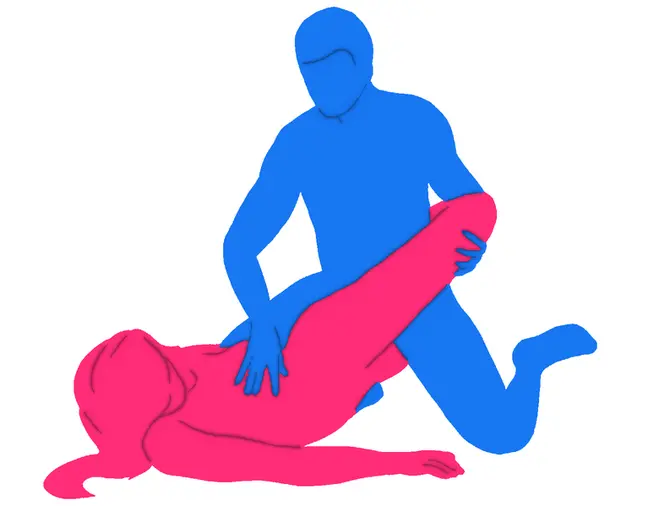
The SpiralBajo
The receiving partner lies on their side at the edge of the bed and the other stands: nobody kneels or holds their weight on their arms.
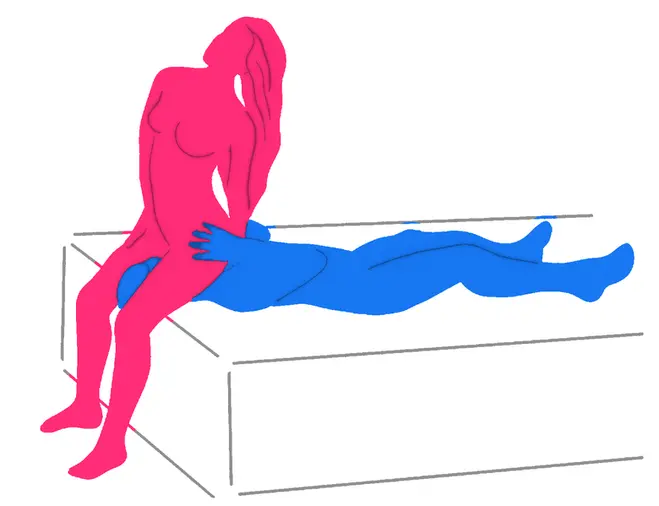
The Queen's ChairBajo
Sitting on the edge of the bed with the back propped on pillows, the receiving partner makes no effort; the other can use a low stool.

The Whisper of the LipsBajo
The armchair supports the back and arms of the seated partner. The kneeling partner needs pain-free knees and a cushion underneath.
Pleasure without penetration, with little effort

Foreplay (Preliminaries)Bajo
Unhurried caressing and kissing give more time for arousal and do not depend on any particular position.
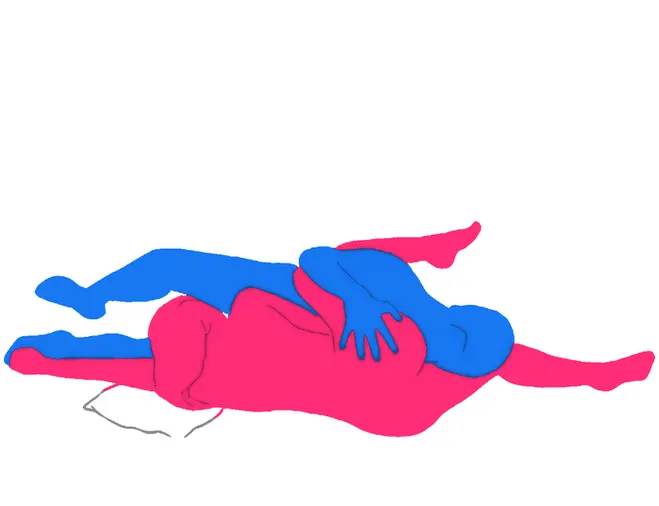
The Firefly DanceBajo
Lying on your sides, nobody bears weight. If your jaw hurts, which can happen with arthritis, alternate with caressing.

Mutual Manual StimulationBajo
Pleasure with the hands in any comfortable position, even sitting. Useful during a flare or in the weeks after surgery.

Erotic MassageBajo
Relaxes the muscles around stiff joints and keeps you close when penetration is not wanted or hurts.
Best avoided or adapted
With severe joint pain or a recent joint replacement, it is best to leave these for later:
- kneeling positions (on all fours, kneeling behind or on top), at least for the first 6 weeks after a knee or hip replacement;
- positions that bend the hip beyond 90°, bring the knees to the chest or put the legs over the shoulders;
- crossing your legs or moving one leg over the other;
- with a recent hip replacement, face-to-face side-lying positions: the AAHKS advises against them during recovery because of the hip flexion they usually involve, so ask your team before using them;
- straddling a low chair if you have a recent hip replacement, as the hip ends up more bent;
- positions that make you hold your weight on your arms or wrists, or keep your balance standing without support.
Keep reading
Articles
Sex education
Position lists
Frequently asked questions
How long after a hip replacement can you have sex?
Usually from around 6-8 weeks, once you feel comfortable, but your surgical team decides. Risky movements, such as bending the hip beyond 90° or crossing your legs, are best avoided for at least 12 weeks.
What is the safest position after a hip replacement?
The most commonly recommended is for the person with the new hip to lie on their back, legs only slightly bent, with their partner on top. Avoid kneeling and positions that bring the knees to the chest.
What about after a knee replacement?
Many people resume at around 6 weeks; in a study cited by the AAHKS, the average was about two months. Avoid kneeling for the first 6 weeks and do not put your weight on the operated knee.
My arthritis is worse in the morning. What can I do?
Try another time of day: many people are stiffer when they get up and more tired at night. A warm bath and your usual painkiller 30 minutes to an hour beforehand help.
Is it normal to still have sex in your 70s or 80s?
Yes. In a large US study, 26% of people aged 75 to 85 had been sexually active in the previous year, and more than half of them had sex at least two or three times a month.
Can I have sex during an arthritis flare?
An inflamed joint needs rest, but intimacy does not have to stop: caressing, massage or manual stimulation let you stay close without loading it. If flares are frequent, raise it with your rheumatology team.
Sources
- Arthritis UK (antes Versus Arthritis). Sex, relationships and arthritis. arthritis-uk.org. 2026. www.arthritis-uk.org
- Watson S. RA and Intimacy. Arthritis Foundation (arthritis.org). www.arthritis.org
- American Association of Hip and Knee Surgeons (AAHKS). Sex after a total hip replacement / Sex after a total knee replacement. hipknee.aahks.org. 2018. hipknee.aahks.org
- Charbonnier C, Chagué S, Ponzoni M, et al. Sexual activity after total hip arthroplasty: a motion capture study. Journal of Arthroplasty. 2014;29(3):640-647. doi:10.1016/j.arth.2013.07.043. archive-ouverte.unige.ch
- HSE (Health Service Executive, Irlanda). Recovering from a hip replacement. hse.ie. www2.hse.ie
- Lindau ST, Schumm LP, Laumann EO, et al. A study of sexuality and health among older adults in the United States. New England Journal of Medicine. 2007;357(8):762-774. pubmed.ncbi.nlm.nih.gov
This guide is for education and does not replace assessment by a health professional. If you have a joint replacement, follow your surgical team's advice and seek help for sudden, severe pain, swelling or fever.