
Pelvic health and pain during sex
Pain during or after sex is common and can almost always be treated. Here is what causes it, when to see someone, what helps according to research and which positions let the person in pain control depth and pace.
Is it normal for sex to hurt?
It is common, but it is not something you have to endure. In the British national survey Natsal-3, with more than 6,600 sexually active women, 7.5% had had pain during sex for at least three months in the previous year. For one in four of them the pain was very frequent, lasted six months or more and caused distress. It was linked above all to vaginal dryness, anxiety about sex and low enjoyment.
It also happens to people with a penis, for example in chronic prostatitis (chronic pelvic pain syndrome), with a short frenulum or a curved penis, although it is less studied. In almost every case there is a treatable cause.
Where it hurts matters
| Type of pain | How it feels | Common causes |
|---|---|---|
| At the entrance | When penetration starts, when inserting a tampon or when the vulva is touched | Dryness (low arousal, breastfeeding, menopause, some contraceptives), infections such as thrush or herpes, vestibulodynia and vaginismus (involuntary tightening of the muscles at the entrance) |
| Deep | With deep penetration or in certain positions; sometimes it lasts for hours | Endometriosis, ovarian cysts, pelvic inflammatory disease, adhesions, irritable bowel |
| After childbirth or in menopause | Tightness, burning or stinging | Scars or tears, hormonal changes (genitourinary syndrome of menopause) |
| In the penis, testicles or on ejaculation | During erection, penetration or ejaculation | Infections, prostatitis, short frenulum, Peyronie's disease |
We explain each cause in detail in Pain during sex: causes and when to see a doctor.
When to see a professional
- If the pain keeps coming back or lasts more than a few weeks.
- If it comes with unusual discharge, a bad smell, itching, sores or fever, especially after sex without a condom: it may be an infection. See how often to get tested for STIs.
- If you bleed after sex or between periods.
- If the pain is deep and your periods are very painful: endometriosis takes years to diagnose and is worth mentioning.
- If penetration is impossible or you are afraid to try.
- If pain after childbirth does not improve over the weeks.
Who to see: a gynaecologist or your GP; a urologist if you have a penis; a pelvic floor physiotherapist; a sex therapist or psychologist when there is fear, anxiety or relationship strain. Note down where it hurts, when it starts and which positions make it worse: it helps a lot with diagnosis.
What helps, according to the evidence
- Pelvic floor physiotherapy. In a trial with 212 women with provoked vestibulodynia, multimodal physiotherapy reduced pain during penetration more than topical lidocaine, and the improvement was still there six months later.
- Lubricant and more time for arousal. Dryness is the factor most linked to pain. See how to choose a lubricant and why responsive desire needs time before penetration.
- Treating the cause. An infection can be cured; in menopause there are moisturisers and local hormone treatments (see sexuality during menopause).
- Sex therapy or psychological therapy. Expecting pain tightens the muscles, and tension increases pain. Breaking that cycle, ideally as a couple, is part of treatment.
- Choosing the position. In a study of 71 patients with endometriosis, 83% had deep pain and for 68% it only hurt in certain positions; rear-entry positions, especially on all fours, were the most painful. No position works for everyone: the idea is to experiment while staying in control.
Before choosing a position: six adjustments
- The person in pain decides depth, pace and when to stop.
- Agree on a pause signal before you start, and always respect it.
- More arousal and plenty of lubricant: with latex condoms, use water- or silicone-based lubricant.
- Limit depth: legs together or straight, a smaller hip angle, or soft depth-limiting rings worn at the base of the penis or toy.
- Rocking instead of thrusting: short, slow movements.
- Penetration is optional. Don't push through pain: repeating it reinforces tension and fear.
Positions that help you manage pain
A selection by goal. Try them with the adjustments above and keep what works for you.
The person in pain controls depth
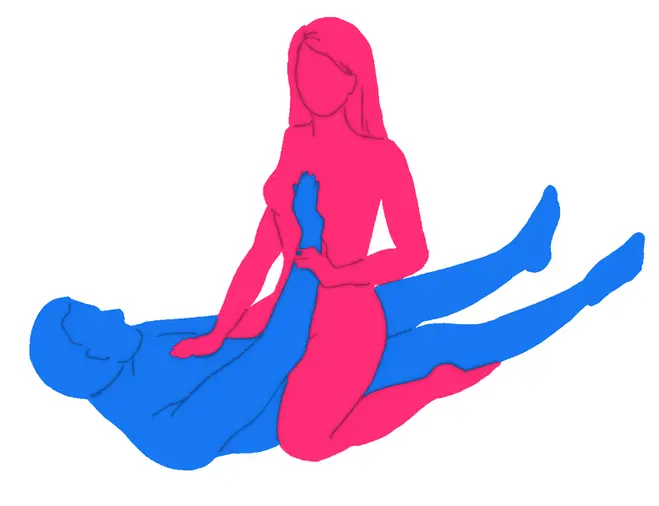
The CowgirlMedio
The receiving partner is on top and decides how deep, how fast and when to stop. Leaning forward reduces depth.
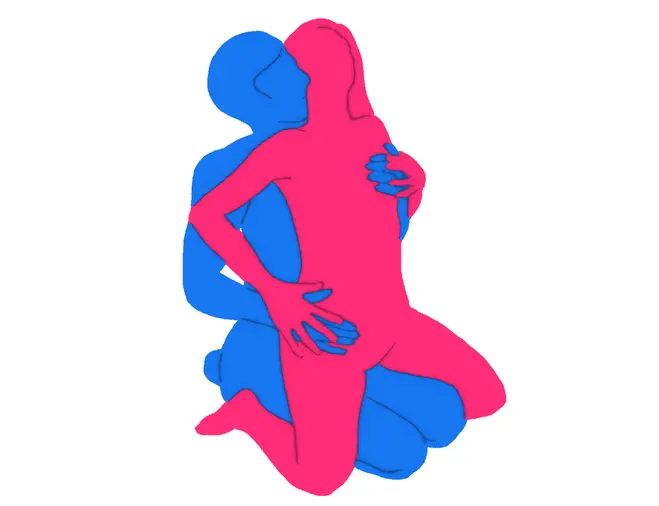
On a Chair (Straddling)Bajo
Sitting astride with feet on the floor, the receiving partner sets the movement with short rocking instead of thrusts.
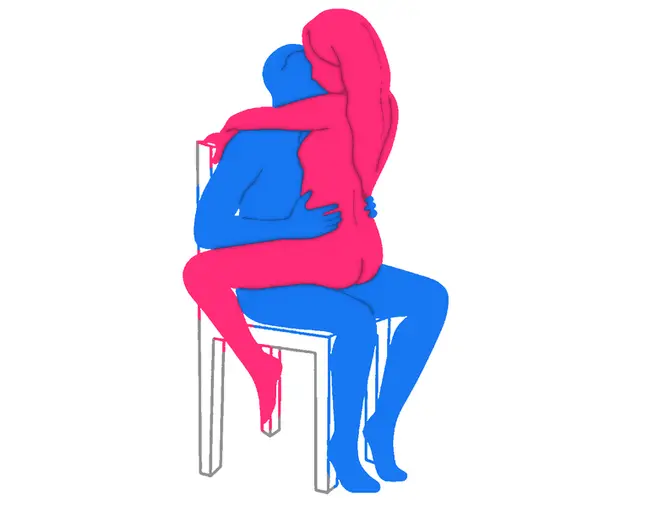
Tantric Sex (Slow Sex)Bajo
Still penetration or just touching, with slow breathing: a gentle way back to penetration without pressure.
Side-lying and shallow
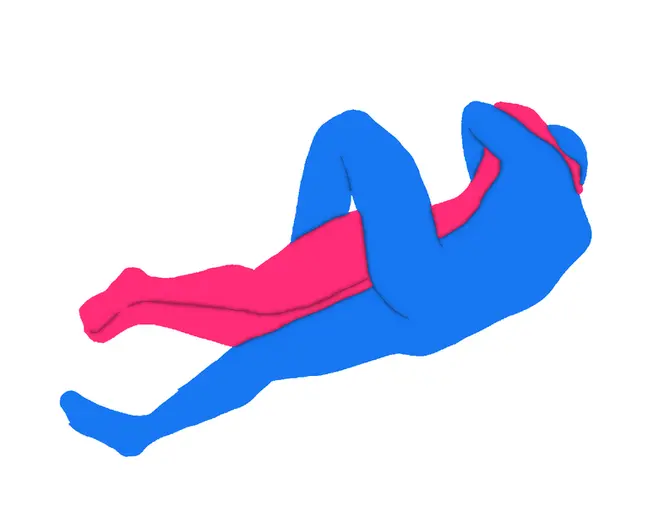
The Half Moon EncounterBajo
Side by side, face to face, with the receiving partner's legs together: shallow penetration and eye contact to communicate.

Side-by-Side Face to FaceBajo
Nobody bears weight and the angle keeps penetration shallow; it also works for rubbing only.
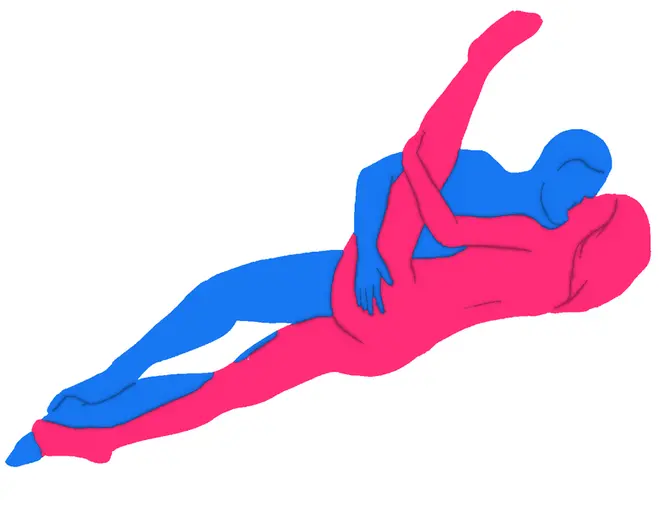
The Venus MirrorMedio
Side-lying and face to face with shallow penetration: easy to go slowly and stop at any moment.
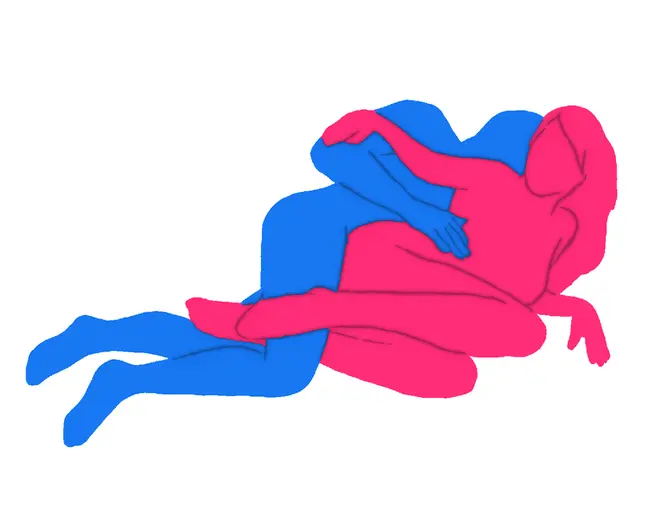
The SpoonBajo
Side-lying with little range of movement; closing the legs limits depth. If the pain is deep, try it with care: rear entry bothers some people more.
Face to face with short strokes
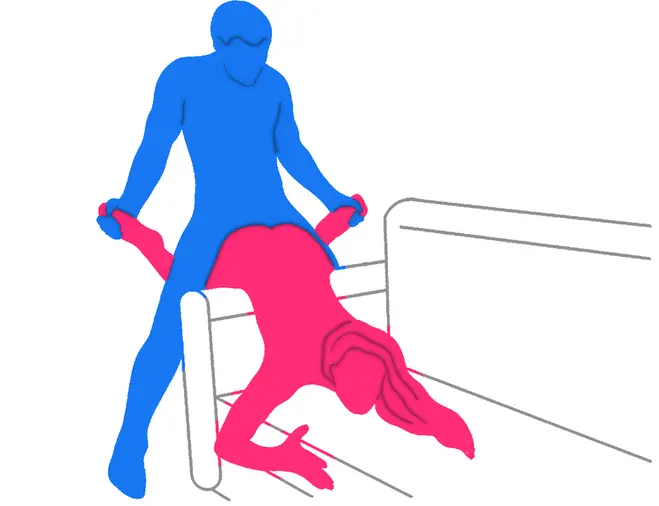
The Cobra (Embracing Hug)Bajo
A full embrace and short rocking instead of thrusting; pubic contact stimulates without needing depth.

The MissionaryBajo
With the receiving partner's legs straight, penetration is shallower; use a cushion under the pelvis only if it eases pain.
Pleasure without penetration

Mutual Manual StimulationBajo
Pleasure without penetration during treatment or whenever penetration hurts.

Frottage (Body Rubbing)Bajo
Genital and body rubbing with full control of pressure.

Erotic MassageBajo
Lowers tension and anticipatory anxiety, which increase pain; move from neutral to erogenous areas.
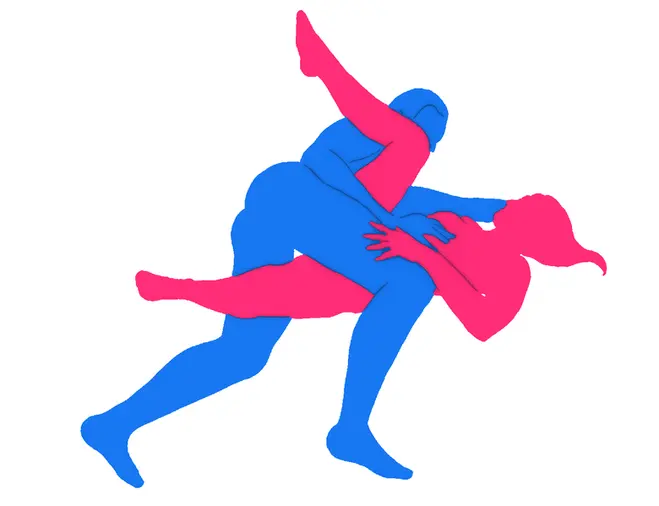
The ScissorsBajo
Vulva-to-vulva rubbing without penetration, with pressure both partners can adjust.
Working with your own body

Lying Down Self-ExplorationBajo
Learn which areas and what pressure hurt, at your own pace and without a partner: the basis of many vaginismus treatments.

Pelvic Floor and KegelBajo
Learn to contract and, above all, to relax the pelvic floor. If there is pain, focus on relaxing and ask a physiotherapist for guidance: squeezing harder does not always help.
Better left for later
While there is pain, it is best to avoid positions that give more depth or take control away from the person who feels it:
- those that raise the pelvis or put the legs over the shoulders;
- vigorous rear entry, especially on all fours, if the pain is deep;
- standing positions holding the other person in the air;
- positions that need wide hip opening if you notice tension in the pelvic floor.
Keep reading
Articles
Infections that can cause pain
Position lists
Frequently asked questions
Which position hurts least if sex is painful?
Positions that let the person in pain control depth and pace, such as being on top or sitting astride, and side-lying positions with shallow penetration. It depends on the type of pain: when it is deep, rear-entry positions tend to hurt more.
Is it normal for sex to always hurt?
No. It can happen now and then, for example with low arousal, but if it keeps happening or lasts for weeks there is a cause worth investigating, and it can almost always be treated.
Do Kegel exercises help with pain?
It depends. If the pelvic floor muscles are tight, as in vaginismus or vestibulodynia, what matters is learning to relax them. A pelvic floor physiotherapist can assess this and give you the right exercises.
Can you have sex with endometriosis?
Yes. Many people manage by combining medical treatment with changes in position and depth, and by making more room for non-penetrative sex on days with more pain.
Which specialist treats pain during sex?
Start with a gynaecologist or your GP, or a urologist if you have a penis. Depending on the cause, a pelvic floor physiotherapist and a sex therapist or psychologist may also be involved.
Is lubricant enough?
If the cause is dryness, it helps a lot. If pain continues despite lubricant and good arousal, see a professional: there may be another cause.
Sources
- Mitchell KR, Geary R, Graham CA, et al. Painful sex (dyspareunia) in women: prevalence and associated factors in a British population probability survey. BJOG. 2017;124(11):1689-1697. doi.org
- Morin M, Dumoulin C, Bergeron S, et al. Multimodal physical therapy versus topical lidocaine for provoked vestibulodynia: a multicenter, randomized trial. Am J Obstet Gynecol. 2021;224(2):189.e1-189.e12. search.pedro.org.au
- Enzelsberger SH, et al. Painful sexual positions in endometriosis patients (the PSST! study): a prospective cohort study. J Sex Med. 2026;23(1). research.jku.at
- Mayo Clinic. Painful intercourse (dyspareunia): causes. www.mayoclinic.org
- The Menopause Society. Sexual health and menopause. menopause.org
This guide is educational and does not replace an assessment by a health professional. If the pain is severe, new, or comes with fever or bleeding, seek medical advice.