
Pleasure, stimulation and self-knowledge
Understanding how your body works is the most direct route to enjoying sex more. This guide covers the real anatomy of pleasure, why penetration alone is not enough for many people, what solo exploration offers, how to use toys hygienically and how to bring what you learn to a partner, with positions chosen by goal.
The anatomy of pleasure: more than meets the eye
For decades, textbooks drew the clitoris as a dot. An anatomical review by urologist Helen O'Connell (Journal of Urology, 2005) showed it is a three-dimensional organ: the glans is the only visible part; behind it lie the body, two roots (crura) that open out in a V shape and two bulbs of erectile tissue that surround the vaginal opening. According to Cleveland Clinic, the whole structure measures about 9 to 11 cm, and the pea-sized glans has around 10,000 nerve endings. With arousal, the bulbs fill with blood and swell.
That is why external stimulation, pressure on the pubic mound or rubbing the vulva reaches structures that sit inside. O'Connell describes the clitoris, urethra and vaginal wall as a single tissue cluster, which helps explain what many people call the G-spot: less a button than an area of the front vaginal wall where pressure reaches that cluster.
Pleasure is not limited to the genitals. Erogenous zones vary from person to person: neck, nipples, inner thighs, perineum, ears or lower back. On the penis, the glans and the frenulum are the most sensitive areas.
The prostate sits a few centimetres inside the anus, towards the front of the body, and many people find stimulating it pleasurable. It calls for plenty of lubricant, short nails, going very slowly and stopping if it hurts; read the guide to safe anal sex first.
The orgasm gap: what the data say
The study by Frederick and colleagues (Archives of Sexual Behavior, 2018) asked 52,588 US adults how often they reached orgasm during sexual encounters in the past month. Share who answered "usually" or "always":
| Group | Usually orgasm with a partner |
|---|---|
| Heterosexual men | 95% |
| Gay men | 89% |
| Bisexual men | 88% |
| Lesbian women | 86% |
| Bisexual women | 66% |
| Heterosexual women | 65% |
The fact that lesbian women orgasm far more often than heterosexual women suggests the gap is not just biological: it depends on what happens during sex. In the same study, women were more likely to orgasm when the encounter included deep kissing, manual genital stimulation or oral sex as well as intercourse.
A survey by Herbenick and colleagues (Journal of Sex & Marital Therapy, 2018) of 1,055 women aged 18 to 94 points the same way: only 18.4% reached orgasm from intercourse alone; 36.6% needed clitoral stimulation during intercourse, and a further 36% said that, while they did not need it, orgasm felt better with it. Not climaxing from penetration alone is the norm, not a problem.
Masturbation: the most direct way to know yourself
Masturbation is normal and healthy, with or without a partner, at any age. Planned Parenthood describes it as a safe way to get to know your body, discover what makes you orgasm and reduce stress. It does not use up desire for a partner or harm your health.
Preferences vary widely. In Herbenick's 2018 study, women described different likes for where they were touched, the pressure, the shape of the movement (circles, up and down, side to side) and the pattern. Exploring alone helps you find yours:
- set aside time and a place with no rush or interruptions;
- start with non-genital areas and move closer gradually;
- change one thing at a time: pressure, rhythm, area or direction;
- try with and without lubricant, with a flat hand or two fingers;
- notice what you do not like too: it is just as useful for a partner.
You do not need to orgasm every time. The aim is to learn what gives you pleasure.
Sex toys: materials, hygiene and safe use
Toys are common: in a national survey by Herbenick and colleagues (Journal of Sexual Medicine, 2009), 52.5% of women aged 18 to 60 had used a vibrator, and 71.5% had never had genital symptoms from using one.
- Non-porous materials: medical-grade silicone, glass or stainless steel. Porous ones, such as some elastomers or jelly, hold on to residue and are harder to clean.
- Cleaning: wash toys before and after each use with warm water and mild soap, or as the manufacturer advises, and let them air-dry.
- Do not share unprotected: a study by Anderson and colleagues (Sexually Transmitted Infections, 2014) found HPV on vibrators after cleaning; on the elastomer one it was still present in some samples 24 hours later. If you share, use a new condom for each person.
- Never straight from anus to vagina: wash the toy or change the condom first.
- Anal use: only toys with a wide base that stops them going all the way in.
- Lubricant: a water-based one is usually recommended with silicone toys. See how to choose a lubricant.
From exploring alone to a partner: asking and guiding
What you learn alone only helps with a partner if you share it. In Frederick's study, women who orgasmed more often were also more likely to ask for what they wanted in bed and to praise their partner for something they enjoyed.
- Talk outside the moment: a walk or dinner is a better setting than bed to bring up something new. There are ideas in how to talk to your partner about trying something new.
- Guide their hand: place your hand over your partner's and show the pressure and rhythm. It is clearer than any explanation.
- Show by example: touching yourself in front of your partner shows what works.
- Ask positively and specifically: "slower", "right there", "a bit softer".
- Build stimulation in: a hand, a toy or pubic contact during penetration is a normal part of sex, not anyone's failure.
When to seek help
- If stimulation or penetration hurts, during or afterwards: see the guide to pelvic health and pain.
- If you never or hardly ever orgasm, even alone, and it bothers you: it is treatable and worth discussing with a sex therapist or health professional.
- If sensitivity, desire or erections change suddenly, especially after starting a medicine.
- If there is bleeding after anal play, or pain that does not settle.
- If an object is stuck in the rectum or vagina: go to A&E and do not try to force it out.
- If you notice sores, itching, unusual discharge or stinging: it may be an infection.
Positions by goal
Grouped by what you want to stimulate or explore. None works the same for everyone: try them with what you have learned above and keep what suits you.
Clitoral stimulation
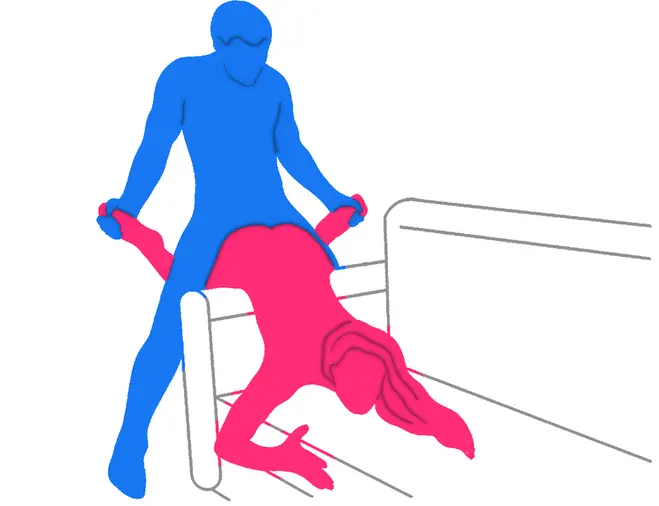
The Cobra (Embracing Hug)Bajo
Face to face and close together, short rocking keeps the pubic bone rubbing the clitoris instead of deep thrusting.

Watering canBajo
With the receiving partner on top, chest to chest, the pubic areas stay in contact and movement can become rubbing on the clitoris.
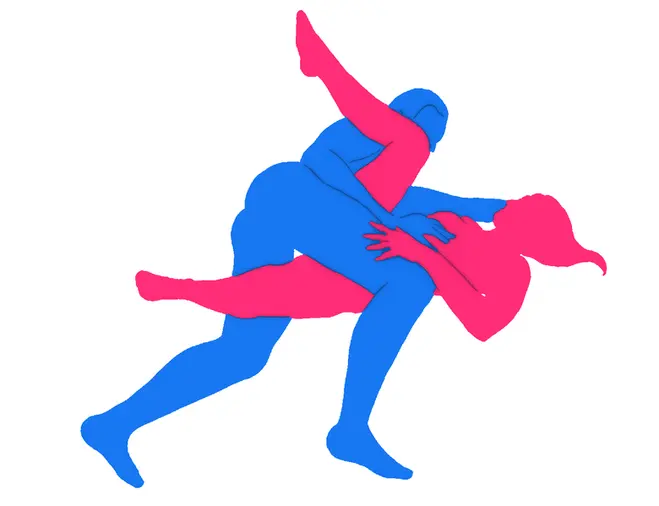
The ScissorsBajo
Direct vulva-to-vulva contact stimulates the glans and the bulb area; each person adjusts pressure by moving their hips.

Foreplay (Preliminaries)Bajo
Taking time for kissing, caressing and manual stimulation before any penetration builds arousal and fills the bulbs with blood.
The receiving partner sets the pace

The CowgirlMedio
The receiving partner is on top and chooses angle, rhythm and depth; leaning forward rubs the clitoris, or a hand can join in.

The PathMedio
On top and face to face, the receiving partner leads the movement and can see the other person's reactions to adjust as they go.

The RockingBajo
Seated, one behind the other, the movement is gentle and hands stay free to stimulate the clitoris or chest.
Oral stimulation
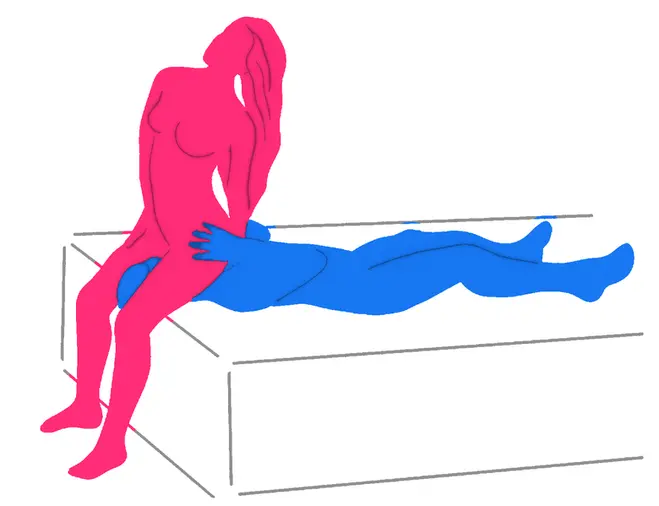
The Queen's ChairBajo
The receiving partner sits comfortably and can guide the pressure and exact spot with their hands or words.

The 69Bajo
Oral stimulation for both at once; it works best lying on your sides, with no weight to bear, so you can relax.
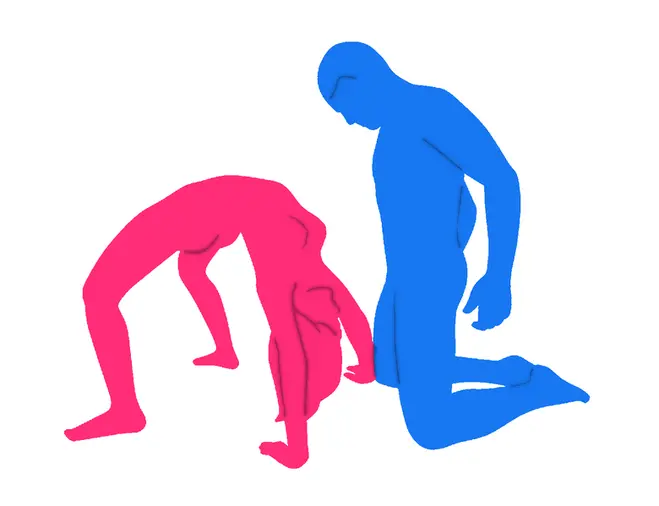
Oral Sex on the Penis (Fellatio)Bajo
The receiving partner can set rhythm and pressure with a hand; the glans and frenulum hold most of the sensitivity.
Internal areas: G-spot and prostate, with care

The Rocking of the WavesMedio
The rear-entry angle directs pressure towards the front vaginal wall; best with plenty of arousal first and slow movement.

The Doggy StyleMedio
From behind, either partner can add manual stimulation; for anal play, use plenty of lubricant and start very slowly.
Self-exploration, alone or with a partner's hand

Lying Down Self-ExplorationBajo
Lying down and relaxed is the simplest way to explore without rushing and try different pressures, rhythms and areas.

Seated Self-ExplorationBajo
With your back supported, the vulva or penis is easier to reach, and you can use a mirror to learn your anatomy.
Mutual Manual StimulationBajo
Each person shows with their hand what they have learned alone; pleasure without penetration or pressure to orgasm.
What to be careful with
To enjoy yourself without setbacks, it is best to avoid:
- moving from anus to vagina, with fingers, penis or toy, without washing or changing the condom;
- putting objects without a wide base into the anus;
- forcing the search for the G-spot or prostate with hard pressure or without arousal first;
- anal play without lubricant or in a hurry;
- very deep or strenuous positions if your aim is clitoral stimulation: they distract from the contact that usually works.
Keep reading
Articles
Definitions
Frequently asked questions
How big is the clitoris?
The visible glans is pea-sized, but the whole clitoris, including its internal body, roots and bulbs, measures about 9 to 11 cm according to Cleveland Clinic.
Is it normal not to orgasm from penetration alone?
Yes, it is the most common experience. In a representative sample of US women, only 18.4% reached orgasm from intercourse alone; most need or prefer clitoral stimulation.
Is masturbating bad if I have a partner?
No. Masturbation is normal with or without a partner, helps you learn what you like and does not reduce desire for the other person.
Does the G-spot exist?
There is no single separate structure by that name. Many people feel pleasure from pressure on the front vaginal wall, an area very close to the internal clitoris and urethra.
Which sex toys are most hygienic?
Those made of non-porous materials such as medical-grade silicone, glass or stainless steel. Wash them after every use and, if shared, use a new condom for each person.
How do I ask my partner for what I like?
Talk about it outside the bedroom and, in the moment, guide their hand with yours or use short, specific phrases such as "slower" or "right there".
Sources
- Frederick DA, John HKS, Garcia JR, Lloyd EA. Differences in Orgasm Frequency Among Gay, Lesbian, Bisexual, and Heterosexual Men and Women in a U.S. National Sample. Archives of Sexual Behavior. 2018. pubmed.ncbi.nlm.nih.gov
- Herbenick D, Fu TJ, Arter J, Sanders SA, Dodge B. Women's Experiences With Genital Touching, Sexual Pleasure, and Orgasm: Results From a U.S. Probability Sample of Women Ages 18 to 94. Journal of Sex & Marital Therapy. 2018. pubmed.ncbi.nlm.nih.gov
- O'Connell HE, Sanjeevan KV, Hutson JM. Anatomy of the clitoris. Journal of Urology. 2005. pubmed.ncbi.nlm.nih.gov
- Cleveland Clinic. Clitoris: Anatomy, Location, Purpose & Conditions. my.clevelandclinic.org. 2026. my.clevelandclinic.org
- Planned Parenthood. Masturbation: Facts About Male & Female Masturbation. plannedparenthood.org. 2026. www.plannedparenthood.org
- Herbenick D, Reece M, Sanders S, Dodge B, Ghassemi A, Fortenberry JD. Prevalence and characteristics of vibrator use by women in the United States: results from a nationally representative study. Journal of Sexual Medicine. 2009. pubmed.ncbi.nlm.nih.gov
- Anderson TA, Schick V, Herbenick D, Dodge B, Fortenberry JD. A study of human papillomavirus on vaginally inserted sex toys, before and after cleaning, among women who have sex with women and men. Sexually Transmitted Infections. 2014. pubmed.ncbi.nlm.nih.gov
This guide is for education and does not replace assessment by a health professional. If you have pain, bleeding or an object you cannot remove, seek help.