
8 Common Condom Mistakes and How to Avoid Them
The most common condom mistakes, from putting it on late to using the wrong lubricant, how to avoid them and what to do if a condom breaks.
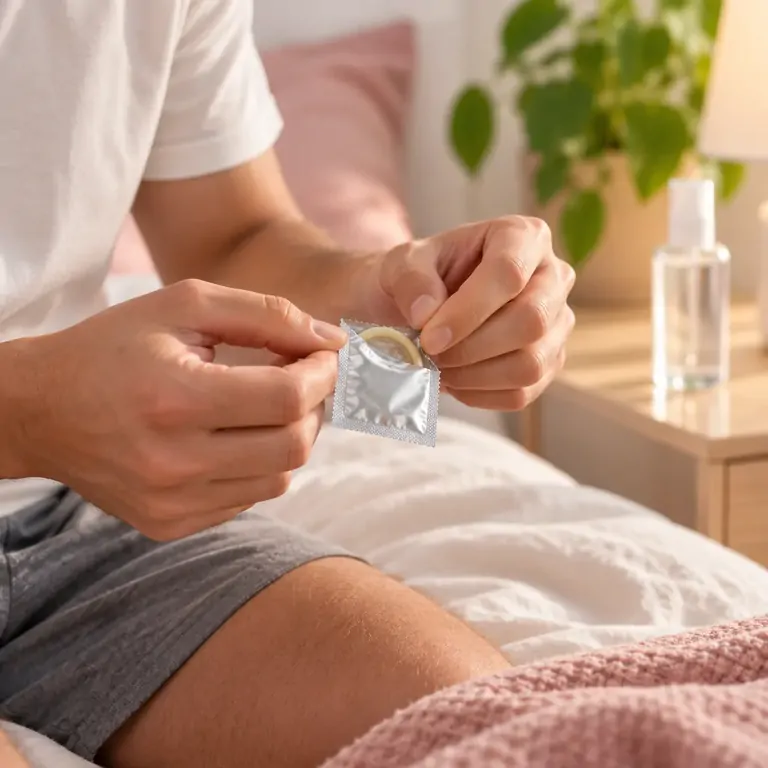
In summary
- Put it on before any genital contact, not halfway through, and keep it on until the end.
- Pinch the tip to leave space and squeeze out the air.
- Use water- or silicone-based lubricant; oils, creams and lotions can make it break.
- One at a time: never two condoms together, and never reuse one.
- Hold it at the base when withdrawing, while the penis is still erect.
Condoms work very well: used correctly every time, external condoms protect about 98 % of couples from pregnancy over a year, and they greatly reduce the risk of most sexually transmitted infections. The problem is usually not the condom but how it is used. A review of 50 studies from 14 countries found that use errors are far more common than breakage.
The 8 most common mistakes
1. Putting it on late or taking it off early
Starting without a condom and putting it on "before finishing", or taking it off before the end, are among the most frequent errors. Pre-ejaculate and skin contact can transmit infections, and some can lead to pregnancy. The condom goes on before any contact between genitals.
2. Not leaving space at the tip
Without space, semen pushes against the latex and the risk of breakage rises. Pinch the tip as you place it, so the air comes out, then unroll it.
3. Putting it on inside out
If it does not unroll easily, it is upside down. Do not turn it over and reuse it: it may already have pre-ejaculate on it. Use a new one.
4. Not unrolling it all the way
The condom should cover the whole penis, down to the base. Half-unrolled condoms slip off more easily.
5. Using the wrong lubricant
Baby oil, petroleum jelly, cooking oil, butter or hand lotion weaken latex and can make it break. Use a water- or silicone-based lubricant: see how to choose a lubricant. Lubricant is especially important for anal sex. Avoid spermicide with nonoxynol-9, which can cause irritation.
6. Using two at once
Two condoms do not protect twice as much: friction between them makes breakage more likely. One is enough if used well.
7. Keeping them in your wallet
Heat and friction in a wallet, pocket or car damage them. Store them somewhere cool and dry, and check that the wrapper is intact and in date before opening it carefully with your fingers, not with teeth or scissors.
8. Withdrawing carelessly
After ejaculating, hold the condom at the base and withdraw while the penis is still erect. Then take it off away from your partner, tie it and throw it in the bin, not down the toilet.
If it breaks or slips off
- To prevent pregnancy, emergency contraception can be used up to 5 days later and works best the sooner it is taken; ask at a pharmacy or health centre.
- If there is a risk of HIV, ask urgently about post-exposure prophylaxis (PEP), which must start within 72 hours.
- Plan an STI test at the right time: see how often to get tested.
Other things to know
- Internal (female) condoms are another option and protect about 95 % of couples from pregnancy with perfect use.
- Change condoms when switching from anal to vaginal sex, and use a new one with each partner.
- Condoms protect less against infections passed by skin contact outside the area they cover, such as herpes or HPV. Learn more in our infections guide.
Frequently asked questions
How effective are condoms?+
With correct use every time, external condoms protect about 98 % of couples from pregnancy over a year, and internal condoms about 95 %. They also greatly reduce the risk of most STIs.
Is it safer to use two condoms?+
No. Friction between two condoms makes them more likely to break. Use one, with water- or silicone-based lubricant.
What should I do if a condom breaks?+
Consider emergency contraception as soon as possible, ask urgently about HIV PEP within 72 hours if there was a risk, and plan an STI test.