
The Rocking: seated rear entry on the floor, back against chest
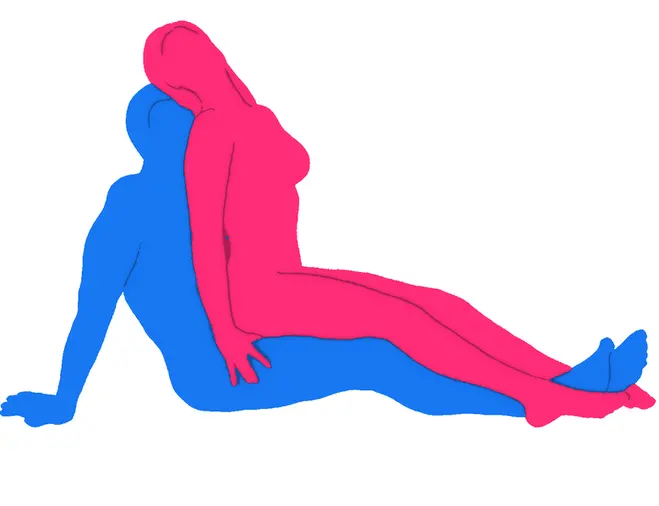
The Rocking is a seated rear-entry position on the floor or the bed. The penetrating partner sits with legs stretched out and leans back on both hands; the receiving partner sits on their lap facing the same way, back against their chest and legs stretched forward on top of theirs. The receiver sets the pace with a gentle rocking of the hips. It is a calm, low-effort position with plenty of body contact.
Also known as: Rocking · Chair
Anatomy and biomechanics
The penetrating partner sits on the floor or the bed with legs stretched straight forward and leans the torso back, arms straight behind and hands flat on the surface. The receiving partner sits on their pelvis facing the same direction, upright, with the back resting against the giver's chest and the head tilted back onto their shoulder. The receiver's legs are stretched forward on top of the giver's legs, close together, and one hand can rest on the giver's thigh. Penetration, vaginal or anal, is from behind and of medium depth. The giver can barely move, so the receiver controls the rhythm by rocking the hips back and forth. The giver's wrists carry the weight of the reclined torso.
Why this position works
The receiving partner sets the pace and can find the angle and rhythm that suit them with small movements of the hips. The back-to-chest contact is warm and enveloping, and by turning the head you can kiss cheek to cheek. One of the receiver's hands is free, so they can add clitoral or genital stimulation. It is a calm position, good for slowing down. Sensations vary from person to person.
Variations of this position
Variation 1: the receiver's feet on the floor
The receiving partner bends the knees and puts the feet flat on the floor on either side of the giver's legs.
The back stays against the giver's chest, but with the feet on the floor the receiver gains push: the rocking can be wider and the receiver can lift slightly to change depth. It takes a little more effort from the thighs.
- The penetrating partner sits with legs stretched out and leans back on the hands.
- The receiver sits on their lap facing away, back against their chest.
- The receiver bends the knees and places the feet flat outside the giver's legs.
- Use the feet to rock the hips, without lifting high enough for the penis to slip out.
Variation 2: kiss over the shoulder
The receiving partner turns the torso slightly and the head towards the giver's shoulder to kiss while rocking.
The legs and the seat do not change. The slight twist of the torso brings the faces together for kissing and changes the angle of the pelvis a little. The rocking becomes slower and shorter.
- Settle into the basic position, back against chest.
- The receiver turns the head and rotates the torso a little towards one side.
- The penetrating partner leans the head forward to meet the kiss.
- Keep the rocking slow so you do not lose balance.
Variation 3: the giver leans against a headboard
Instead of leaning back on the hands, the penetrating partner leans against cushions, a headboard or a wall.
The seat and the receiver's position are the same, but the giver's back is supported. This frees both hands, takes the load off the wrists and lets the giver hold or caress the partner while they rock.
- Place firm cushions against the headboard or the wall.
- The penetrating partner sits with legs stretched out and leans the back against them.
- The receiver sits on their lap facing away, back against their chest.
- The giver uses the free hands to hold the hips or caress the partner.
Variation 4: the receiver's legs apart
The receiving partner opens the legs and rests them on either side of the giver's legs instead of on top of them.
With the thighs apart, the pelvis tilts slightly and the vulva or genitals are more exposed, which makes it easier for either partner to add manual stimulation. The contact between the thighs is reduced.
- Start from the basic position, back against chest.
- The receiver slides the legs to the sides, outside the giver's legs.
- Keep the feet or heels resting on the surface for stability.
- Rock gently and add caresses with the free hand.
✓ Tips
- Do it on a firm surface; a folded blanket or mat on the floor makes the giver's sitting more comfortable.
- The penetrating partner can rest on the forearms or lean against cushions or a headboard if the wrists get tired.
- Use lubricant; for anal sex, use plenty of it, along with a condom, and go slowly.
- The receiver should rock gently rather than lift up and drop down: if the penis slips out and is sat on at an angle, it can bend and get injured.
- Stop if there is pain.
Key facts
- Interaction type
- Seated vaginal or anal penetration from behind
- Active anatomy
- Penis
- Receptive anatomy
- Vagina / Anus
- Main stimulation
- Seated vaginal or anal penetration from behind, with the receiver rocking
- Setups and participants
- Couple · 2 people Hetero
Frequently asked questions
Do we need a chair?
No. Despite its other name («Chair»), it is done on the floor or the bed: the penetrating partner sits with legs stretched out and leans back on the hands.
Who controls the movement?
Mainly the receiving partner, who rocks the hips back and forth. The penetrating partner, supported on the hands, can barely move.
Can we kiss?
Yes, cheek to cheek, if the receiver turns the head. There is no eye contact, but there is a lot of body contact.
How can we add stimulation?
The receiver has one hand free to stimulate the clitoris or genitals. If the giver leans against a headboard (variation 3), both hands are free to caress.
Safety and evidence
Scientific context for common terms used on this page. Keeping these terms makes the content easier to understand; the sources clarify what is established and what remains uncertain.
G-spot: what the evidence says
“G-spot” is a widely used term for a sensitive area of the anterior vaginal wall. Scientific literature has not established a discrete anatomical structure with an agreed location, size and nature; sensitivity and response can vary between individuals.
A-spot / AFE zone: limited evidence
The “A-spot” or AFE zone has been proposed to describe a deeper area of the anterior vaginal wall. Available evidence is limited and does not support presenting it as a confirmed anatomical structure.
Reviewed by the editorial team ·
Related sex positions

Reverse Cowboy
Rear penetration position with stimulation of the G spot and A point.

The Spider
A face-to-face double crab: both lean back on hands and feet, he lifts his hips and she sits astride his pelvis.
The Path
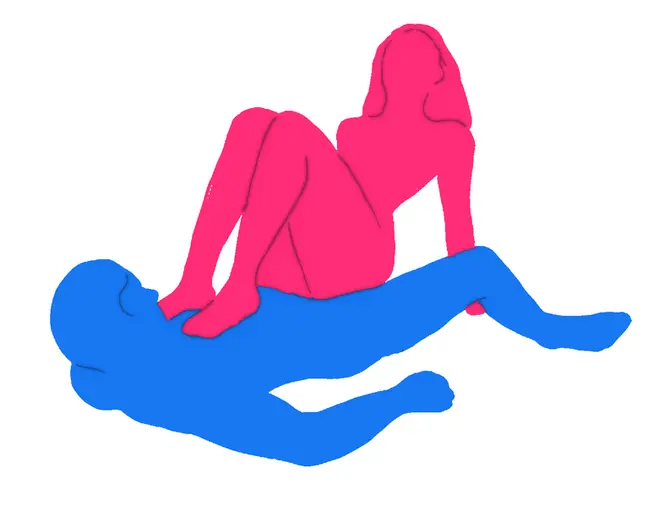
He lies flat on his back with legs straight. She sits on his pelvis facing him, leans back with her hands on the bed…

Asian Cowgirl
Demanding reverse woman-on-top position: she bends far forward over him, one foot beside his hips and the other leg…

The Chocolate Hug
Posterior penetration position with G-spot stimulation.

Bright Moon
The receiving partner lies on their back with legs open and stretched past their partner's hips; the penetrating…

The Vertical Embrace
The receiving partner lies on their back with the pelvis raised on the thighs of the penetrating partner, who kneels…

Waterfall
An acrobatic face-to-face position: the receiving partner lies face up with the pelvis resting on the thighs of the…

The Octopus
Rear-entry position with stimulation of the A-spot and G-spot.

The Crab
Face-to-face position on the floor: she half-reclines on one arm with one leg stretched out, and he kneels upright…

Rider
Squatting cowgirl: the penetrating partner lies on their back; the receiver squats over them with feet on the bed and…

Bear Hug
Posterior penetration position with stimulation of the G-spot and A-spot.