

Anatomy and biomechanics
In this position, the receiving person lies on their back with their legs raised and supported on the shoulders or chest of the penetrating person, who stands or kneels in front of them. This position allows for precise control of the depth and angle of penetration.
Why this position works
This position is appreciated for the intensity of penetration and the ability to stimulate sensitive points such as the G-spot or the prostate. Additionally, it allows for a clear and close view between participants, fostering emotional connection.
The Bridge of Sighs: Complete Guide
The Bridge of Sighs is a sexual position that allows for deep penetration and intense stimulation. Ideal for couples seeking an intimate and pleasurable connection.
Also known as: Pleasure Bible/The Bridge/The Elevation
Variations of this position
Variant: The Reverse Bridge
The receptive partner lies face down with their legs raised and resting on the shoulders or chest of the penetrating partner.
- The receptive partner lies face down and raises their legs, resting them on the shoulders or chest of the penetrating partner.
- The penetrating partner kneels or stands in front of the receptive partner, aligning their bodies.
- They begin penetration with slow, controlled movements, adjusting the depth according to both partners' pleasure.
Variant: The Side Bridge
Both people lie on their sides, with the receiving partner supporting one leg on the penetrating partner's shoulder or chest.
- The receiving partner lies on their side and lifts one leg, resting it on the penetrating partner's shoulder or chest.
- The penetrating partner lies on their side facing the receiving partner, aligning their bodies.
- They begin penetration with gentle, controlled movements, adjusting the depth according to both partners' pleasure.
Variant: The Elevated Bridge
The receptive partner lifts their legs and rests them on the penetrating partner's shoulders, who stands upright.
- The receptive partner lies on their back and lifts their legs, resting them on the penetrating partner's shoulders.
- The penetrating partner stands upright in front of the receptive partner, aligning their bodies.
- They begin penetration with deep, controlled movements, adjusting the depth according to both partners' pleasure.
✓ Tips
- Ensure the receiving person is comfortable and properly supported to avoid tension in the lower back.
- Use lubricant to facilitate penetration and reduce friction.
- Communicate constantly to adjust the depth and rhythm according to both partners' pleasure.
- Avoid sudden movements that could cause discomfort or injury.
Key facts
- Interaction type
- Vaginal Sex/Anal Sex
- Active anatomy
- Pénis / Doigts
- Receptive anatomy
- Vagin / Anus
- Main stimulation
- G-Spot/Prostate
- Setups and participants
- Couple · 2 people Hetero
Frequently asked questions
Is this position suitable for beginners?
It depends on the flexibility and comfort of both people. It is advisable to practice carefully and adjust the supports as needed.
How can I make it more comfortable?
Use pillows or cushions to support the legs and back of the receiving person. You can also adjust the height by changing the position of the penetrating person.
What precautions should I take?
Make sure both are relaxed and communicating. Avoid sudden movements and use lubricant for a more pleasurable and safe experience.
Safety and evidence
Scientific context for common terms used on this page. Keeping these terms makes the content easier to understand; the sources clarify what is established and what remains uncertain.
G-spot: what the evidence says
“G-spot” is a widely used term for a sensitive area of the anterior vaginal wall. Scientific literature has not established a discrete anatomical structure with an agreed location, size and nature; sensitivity and response can vary between individuals.
A-spot / AFE zone: limited evidence
The “A-spot” or AFE zone has been proposed to describe a deeper area of the anterior vaginal wall. Available evidence is limited and does not support presenting it as a confirmed anatomical structure.
Last editorial review:
Related sex positions

The Gourmet Doggy Style

The Dive

Narcissus

The Donkey Punch

Breeze
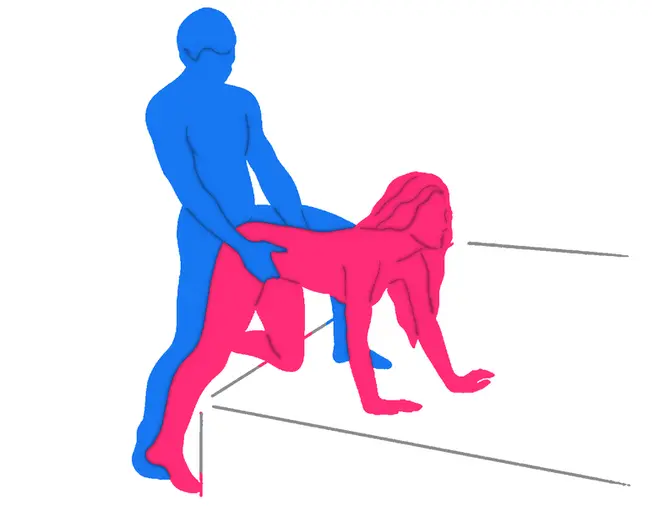
Advanced Edge Doggy Style

Superwoman

The Paris Tower

The Dance of Venus

Seashell

The Airplane
