

Anatomy and biomechanics
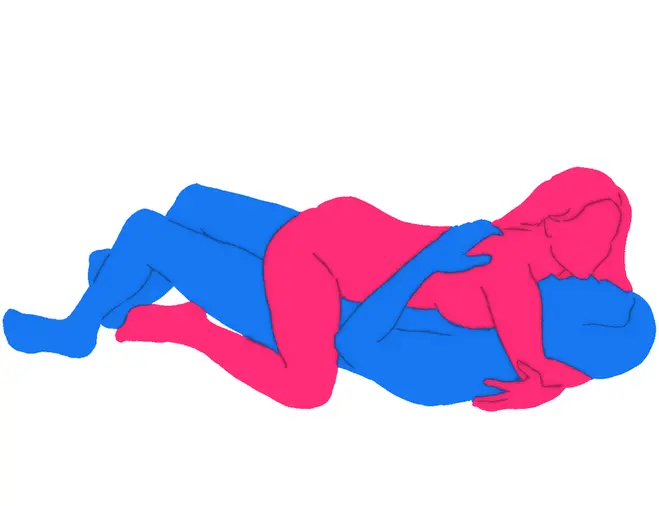
In the Starfish position, the receptive person sits astride the penetrating person while facing the opposite direction. The penetrating person can place their feet on the floor or bed for stability. The receptive person can use their hands or forearms to adjust rhythm, angle and depth to suit their comfort level.
What this position may offer
It may appeal to some people because the receptive person retains control over rhythm, angle and depth, while both people can adapt the movement. Comfort and sensations vary from person to person, so both people should adjust their support or position and stop if pain occurs.
Starfish sex position: setup, angle and depth guide
In the Starfish position, the receptive person is on top and faces the opposite direction. Using this support, they can adjust rhythm, angle and depth to suit their comfort level. Sensations along the anterior vaginal wall vary from person to person; the position does not guarantee stimulation of the so-called G-spot or A-spot, or any particular pleasure outcome.
Also known as: Starfish/Inverted/Reverse Cowgirl
Variations of this position
Variant 1: Hand support
The receptive person may find it easier to adjust rhythm, angle and depth when supporting themselves on their hands.
- The receptive person sits astride the penetrating person while facing the opposite direction.
- They use their hands for balance and to control the movement.
- Both people coordinate the movement and make gradual adjustments based on what feels comfortable.
Variant 2: Forearm support
Distributing support along the forearms keeps the torso at an intermediate height and may gradually change the angle or depth.
- The receptive person sits astride the penetrating person while facing the opposite direction.
- They distribute their support along the forearms to stabilize the torso and control the movement.
- Both people coordinate the movement and make gradual adjustments to suit their comfort.
Variant 3: Support on the elbows
Concentrating support on the elbows may bring the torso closer to the surface and limit some of the range, changing the angle or depth.
- The receptive person sits astride the penetrating person while facing the opposite direction.
- They concentrate their support on the elbows to lower the torso and control the range of movement.
- Both people coordinate the movement and make gradual adjustments based on what feels comfortable.
✓ Tips
- Use pillows or cushions to adjust the height and maintain comfort.
- Communicate constantly to adjust the rhythm and depth of penetration.
- Avoid sudden movements that may cause discomfort in the back or joints.
Key facts
- Interaction type
- Vaginal sex
- Active anatomy
- Penis
- Receptive anatomy
- Vagina
- Main stimulation
- Possible contact with the anterior vaginal wall (variable sensitivity); adjustable depth
- Setups and participants
- Couple · 2 people Hetero
Frequently asked questions
Which parts of the body bear most of the load in this position?
The load may be shared among the trunk, shoulders or arms, glutes and legs, depending on each person’s support and movement.
Is this position suitable for beginners?
It may require balance and coordination. Start with stable support, slow movements and continuous communication.
How can I change how this position feels?
Adjust height, support, angle and rhythm gradually. Sensations vary from person to person; reduce the depth or stop if discomfort or pain occurs.
Safety and evidence
This section summarizes anatomical and clinical evidence relevant to this position. The sources provide context; they do not show that a specific position guarantees pleasure, orgasm or a particular type of stimulation.
G-spot: what the evidence says
The “G-spot” is a widely used term for a sensitive area of the anterior vaginal wall. Scientific literature has not demonstrated a discrete anatomical structure with an agreed location, size and nature; sensitivity and response can vary from person to person.
A-spot / AFE zone: limited evidence
The “A-spot” or AFE zone has been proposed as a term for a deep area of the anterior vaginal wall. The available evidence is limited and does not support treating it as a confirmed anatomical structure.
Anatomical variability
Vaginal shape, axis and dimensions vary considerably from person to person. As a result, depth and comfort may differ even when using the same position.
Pain and deep penetration
If penetration causes deep, recurrent or persistent pain, it is advisable to reduce the depth or stop the activity. If the problem continues, a professional assessment is recommended.
Last editorial review:
Related sex positions

The Queen of Shadows

Vulgar Chair

Cowgirl Bent Over

Scorching Knot

Loba

The Arch

Navigator

Intimate Arch
Watering can

Frog Style

Princess Elevated
