

Anatomy and biomechanics
In Close Breathing, the bodies are positioned face to face, sitting, with her on top. Penetration is usually medium, allowing for precise adjustment of depth. Clitoral and G-spot stimulation is intense due to proximity and control of movements.
Why this position works
This position is enjoyed for the closeness and emotional connection it allows. The deep and clitoral stimulation, along with the ability to adjust penetration, make it very pleasurable for both partners.
Close Breathing: Intimate Union and Deep Pleasure
Close Breathing is a sexual position that emphasizes the emotional and physical connection between partners. In this position, the bodies are united face to face, sitting, with her on top, allowing for medium penetration and deep clitoral stimulation.
Also known as: Close breathing/Intimate union/Deep embrace
Variations of this position
Closed Breathing with Circular Movements
Add circular hip movements to increase clitoral and G-spot stimulation.
- She sits on top of him, face to face, and adjusts the depth of penetration.
- Initiate slow circular hip movements, pressing the clitoris against his body.
- Adjust the rhythm and pressure according to both partners' pleasure.
Closed Breathing with Forward Lean
Lean the torso forward to change the angle of penetration and increase G-spot stimulation.
- She sits on top of him, face to face, and adjusts the depth of penetration.
- Lean the torso forward, placing the hands on his shoulders.
- Move the hips forward and back to stimulate the G-spot.
Closed-Leg Breathing with Legs Interlaced
Interlace your legs to increase stability and control of movements.
- She sits on top of him, face to face, and adjusts the depth of penetration.
- Wrap your legs around his waist for added stability.
- Move your hips in smooth, rhythmic motions to stimulate the clitoris and G-spot.
✓ Tips
- Adjust the height and supports (pillows, edge of the bed) to keep you both comfortable and stable.
- Avoid sudden movements to prevent losing balance.
- Communicate constantly to adjust the depth and rhythm of penetration.
- Maintain an upright posture to avoid back tension.
Key facts
- Interaction type
- vaginal sex
- Active anatomy
- Penis
- Receptive anatomy
- Vagina
- Main stimulation
- Clitoral and deep spot
- Setups and participants
- Couple · 2 people Hetero
Frequently asked questions
Is this position suitable for beginners?
Yes, it is suitable for beginners due to its simplicity and the ability to adjust penetration and rhythm.
How can I increase the intensity of pleasure?
Increase the intensity of pleasure by moving the hips in circles or adjusting the depth of penetration.
What can I do if I feel discomfort in my back?
Make sure you have good back support and adjust the height with pillows or cushions to maintain an upright posture.
Safety and evidence
Scientific context for common terms used on this page. Keeping these terms makes the content easier to understand; the sources clarify what is established and what remains uncertain.
G-spot: what the evidence says
“G-spot” is a widely used term for a sensitive area of the anterior vaginal wall. Scientific literature has not established a discrete anatomical structure with an agreed location, size and nature; sensitivity and response can vary between individuals.
Last editorial review:
Related sex positions
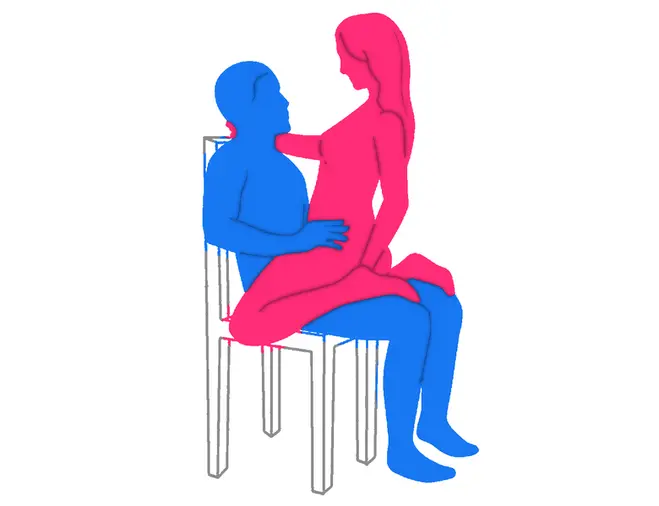
Amazon on the chair

Spread Eagle

London Bridge

El Rodeo

The Cosmic Encounter

The Lovers' Dance

The Collapse

Passionate Explorer
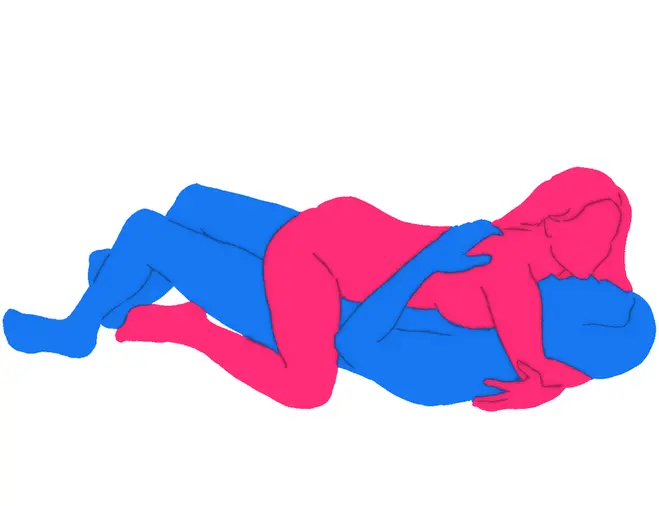
Watering can

Love Basket

Classic Harp
