

Anatomy and biomechanics
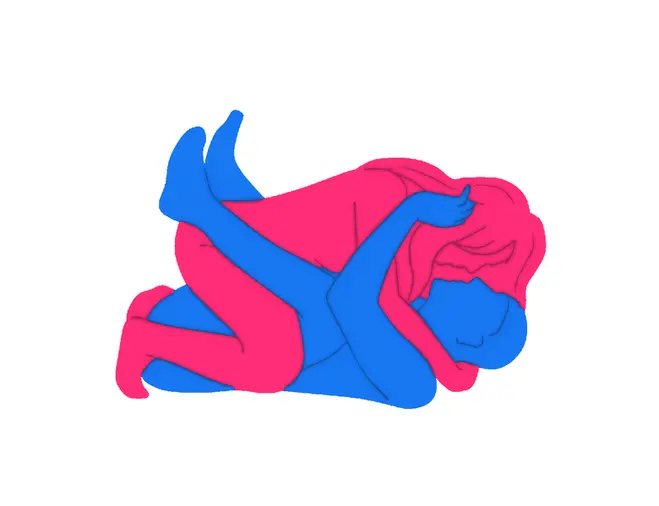
In this position, the bodies align so that the receptive person sits on the penetrating person, creating an inverted V shape. Penetration is deep, and the height and supports can be adjusted for greater comfort.
Why this position works
This position is very pleasurable due to deep penetration and direct stimulation of erogenous zones like the G-spot and the A-spot. Additionally, it allows for a great variety of movements and rhythms.
V Formation: Deep and Stimulating Sexual Position
The V Formation is a sexual position where the couple arranges themselves in an inverted position, with her on top. This position allows for deep penetration and intense stimulation of the G-spot and the A-spot.
Also known as: V formation / In V / Inverted position
Variations of this position
Variant with lateral support
In this variant, the receptive person leans laterally on the penetrating person, allowing for a more lateral penetration and different stimulation.
- The receptive person sits on the penetrating person, but instead of facing each other, they turn to the side.
- The penetrating person can rest their head and arms on a pillow for added comfort.
- Adjust the penetration and rhythm according to the comfort and pleasure of both.
Variant with legs raised
This variant involves raising the legs of the receptive person, which increases the depth of penetration and changes the angle of stimulation.
- The receptive person sits on the penetrating person and raises their legs, resting them on the shoulders of the penetrating person.
- The penetrating person can hold the legs of the receptive person for greater stability.
- Adjust the penetration and rhythm to maximize pleasure and comfort.
Variant with circular movement
In this variant, the receptive person makes circular movements with their hips, which increases the stimulation of the G-spot and the A-spot.
- The receptive person sits on the penetrating person and begins to move their hips in circles.
- The penetrating person can hold the hips of the receptive person to guide the movement.
- Adjust the speed and intensity of the circular movements to maximize pleasure.
✓ Tips
- Make sure to use pillows or supports to maintain comfort and stability.
- Avoid abrupt movements to prevent losing balance.
- Communicate constantly to adjust the depth and rhythm according to your preferences.
Key facts
- Interaction type
- Vaginal sex
- Active anatomy
- Penis
- Receptive anatomy
- Vagina
- Main stimulation
- G-spot / A-spot
- Setups and participants
- Couple · 2 people Hetero
Frequently asked questions
Is this position suitable for beginners?
Yes, but it's important to practice first with pillows and supports to ensure comfort and stability.
How can I increase the intensity of the stimulation?
Adjust the height of the supports and experiment with different angles of penetration to find the point of greatest pleasure.
What can I do if I feel discomfort in the lower back?
Use more pillows to support the back and adjust the position to reduce pressure on the lumbar area.
Safety and evidence
Scientific context for common terms used on this page. Keeping these terms makes the content easier to understand; the sources clarify what is established and what remains uncertain.
G-spot: what the evidence says
“G-spot” is a widely used term for a sensitive area of the anterior vaginal wall. Scientific literature has not established a discrete anatomical structure with an agreed location, size and nature; sensitivity and response can vary between individuals.
A-spot / AFE zone: limited evidence
The “A-spot” or AFE zone has been proposed to describe a deeper area of the anterior vaginal wall. Available evidence is limited and does not support presenting it as a confirmed anatomical structure.
Last editorial review:
Related sex positions

Loba

The Spectator

Dutch Oven

Weeping Willow

Intimate Arch

Reverse Cowgirl

The Collapse

London Bridge

The Classic Cradle
The Fifth Element

Passionate Explorer
