
The Bridge (The Arch): penetrating partner in a bridge, receiving partner squatting on top
The Bridge is an acrobatic position in which the arch is made by the penetrating partner: face up, resting on hands and feet, they push the pelvis up like a gymnastics bridge or, in its more manageable form, a reverse tabletop. The receiving partner gets on top facing their head, feet on the floor on either side and knees bent in a half squat, and lowers the pelvis until the two connect. The receiving partner sets the pace; the person in the bridge carries almost all the effort. It is spectacular, demanding and short-lived.
Also known as: The Bridge · The Arch

Anatomy and biomechanics
The penetrating partner lies on their back, places the hands on the floor beside the head (or behind the shoulders in the reverse-tabletop version) and the soles of the feet flat, and pushes the pelvis up into an arch; the head either hangs back or stays in line with the torso. The receiving partner stands astride that raised pelvis, facing their partner's head, feet on either side of the hips, and bends the knees into a half squat until they connect, resting both hands on the partner's belly for balance. Most of the movement comes from the receiving partner, rising and lowering with the legs, because the person in the bridge can barely move without losing the position. Penetration can be deep. The receiving partner should not drop their weight onto the bridge: the lower back, wrists and neck are already working hard.
Why this position works
Its appeal is mostly the challenge and the play: it is unusual, visually striking and flips the usual roles, since the penetrating partner stays almost still while the receiving partner decides pace and depth. Some people find the angle of the raised pelvis intense. There is no eye contact or kissing, and it is not meant to be held for long: it works best as a brief moment within a more comfortable position. Sensations vary from person to person.
Variations of this position
Variation 1: reverse tabletop
Instead of a full bridge, the penetrating partner holds a reverse tabletop: hands behind the shoulders, knees at 90° and torso level. The receiving partner stays on top in a half squat.
The arch is much smaller: the torso is flat and the head in line, which reduces the load on the lower back and neck, although the arms still work. This is the form shown in the published image.
- The penetrating partner sits on the floor, places the hands behind, fingers pointing toward the feet, and the feet flat in front.
- They lift the pelvis until the torso is level, knees at 90°.
- The receiving partner stands astride, facing their head, and lowers into a half squat with the hands on their belly.
- The receiving partner keeps a short, slow rhythm; stop as soon as the partner's arms start to shake.
Variation 2: shoulder bridge
The penetrating partner does a low bridge: shoulders and upper back on the floor, arms by the sides and feet flat, pelvis raised. The receiving partner lowers onto them in a half squat.
No weight on the hands and no hanging head: the load moves to the glutes and legs, and the strain on wrists and neck disappears. The pelvis sits lower, so the receiving partner bends the knees further.
- The penetrating partner lies face up with knees bent and feet flat near the buttocks.
- They lift the pelvis by pushing through the heels, keeping shoulders and arms on the floor.
- The receiving partner straddles them, facing their head, and lowers into a half squat until they connect.
- The receiving partner moves up and down with the legs, without resting their weight on the partner's pelvis.
Variation 3: with cushions under the pelvis
The penetrating partner rests the lower back and buttocks on several firm cushions or a low ottoman, so the pelvis stays raised without holding a bridge. The receiving partner stays on top in a half squat.
The cushions hold the pelvis up: the penetrating partner barely works and can stay longer. It is the most accessible version, though part of the arch is lost.
- Stack firm cushions or use a low, stable ottoman.
- The penetrating partner lies face up with the lower back and buttocks on them and feet on the floor.
- The receiving partner straddles them, facing their head, and lowers into a half squat.
- Check that the cushions do not slide before picking up the pace.
✓ Tips
- Warm up the back, wrists and shoulders first: the person in the bridge loads the lower back, neck and wrists.
- If a full bridge is too hard, use a reverse tabletop (knees at 90° and torso level) or rest the pelvis on firm cushions.
- The receiving partner should carry their own weight on their legs and lower slowly, never dropping onto the partner's pelvis.
- Keep strokes short and controlled: if the penis slips out, guide it back by hand; a bad angle with weight on top can bend and injure it.
- Use a firm, non-slip surface with space around you in case you need to come down suddenly.
- Hold it briefly and stop at any pain, dizziness or shaking in the arms.
- Use lube if needed and a condom if you want protection against STIs and pregnancy.
Key facts
- Interaction type
- Vaginal penetration with the penetrating partner in a bridge and the receiving partner half-squattin
- Active anatomy
- Penis
- Receptive anatomy
- Vagina
- Main stimulation
- Deep vaginal penetration with the receiving partner on top setting the pace
- Setups and participants
- Couple · 2 people HeteroLesbian
Frequently asked questions
Who makes the bridge?
The penetrating partner. They rest on hands and feet with the pelvis raised, and the receiving partner straddles them on their feet in a half squat.
Is it safe?
It is demanding: it loads the lower back, neck and wrists of the person in the bridge, and the penis can bend if the receiving partner drops down or it slips out. Go slowly, keep it short and stop at any pain.
Is there an easier version?
Yes: a reverse tabletop (knees at 90° and torso level) or resting the penetrating partner's pelvis on firm cushions greatly reduces the effort.
Who sets the pace?
The receiving partner, rising and lowering with the legs. The person in the bridge can barely move without losing the position.
Sources and references
- Literatura de sexología clínica y ergonomía sexual
Reviewed by the editorial team ·
Related sex positions

The Candelabra
Standing rear entry in an embrace: the receiving partner stands upright on tiptoe with legs together, back pressed…

The Hammock
The penetrator sits or kneels and holds the legs of the receiver, who reclines backward supporting themselves on…

The L (Right Angle)
One person lies on their back; the other positions themselves on their side, perpendicular, sliding under their legs…

Double Penetration
Double penetration is the simultaneous penetration of two orifices (usually the vagina and anus) or of the same…
The Queen's Chair
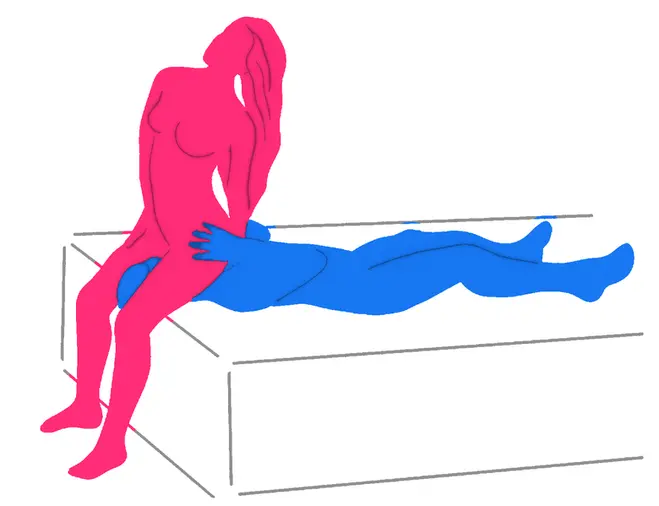
He lies on his back along the bed with his head at the edge, and she sits on his face at the edge of the bed, feet on…

Oral Sex on the Vulva (Cunnilingus)
The receiving partner lies on their back with a pillow under the hips and the knees apart; the giving partner lies…

Balcony of Sighs
Standing carry: he holds her in his arms, under her thighs, while she clings to his neck, face to face, for deep…

The Ecstasy Spiral
He stands and lifts her in his arms, holding her under the buttocks; she wraps a leg around his hip, holds on to his…

Mirror
Both partners half-kneel face to face in a mirrored stance; she rests one leg over his forward thigh, and they hold…

The Catapult
The receiving partner lies on their back with the buttocks at the edge of the bed and raises both legs, straight and…

The Hummingbird's Flight V
Both stand face to face in a close embrace, feet on the floor: her legs are straight between his, and he bends his…
The 69
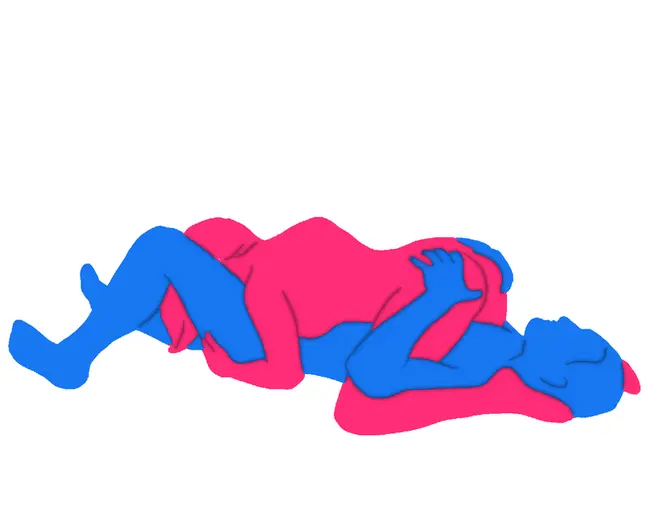
Both people position themselves with their bodies inverted, head next to the other person's genitals, to practice…