

Anatomy and biomechanics
Superior seated position without knee support: the top person balances on the soles of their feet (squatting position), which increases the vertical range of motion and shifts the effort to the quadriceps and balance. The receiver can hold the hips or the partner's hands for stability.
Why this position works
It offers control and range that no other position provides: the top person decides depth and rhythm with total freedom. It's dynamic, powerful, and very visually stimulating. Ideal for high-energy moments, and the bottom person can help by holding on to make it last longer.
The Amazon: vertical control in its purest form
The Cowgirl levels up. In the Amazon, the top person supports themselves on the soles of their feet, not their knees: they gain enormous vertical range and absolute control, in exchange for some leg strength.
Also known as: amazon · squat · la araña · standing on the partner
Variations of this position
1. Assisted: support on a headboard
Like the Amazon, with hand support on a headboard or wall behind.
The person on top holds onto a headboard or wall to offload some of the effort and gain stability.
- Position yourself in a squatting stance on top.
- Hold onto the headboard or the wall.
- Use the support to regulate the momentum.
2. Reclined: change the angle
Like the Amazon, with the torso slightly reclined and one hand supported behind.
The one on top leans back slightly, supporting themselves with one hand, changing the angle towards the anterior wall.
- From the Amazon position, lean back a bit.
- Support yourself with one hand on your partner's thigh.
- Adjust the angle.
✓ Tips
- Hold onto your partner's hands or chest to balance.
- Alternate the vertical thrust with breaks by supporting your knees.
- The bottom person can push their hips to help.
- A headboard or a wall behind provides extra support.
Key facts
- Interaction type
- Penetration with the receiver squatting on top
- Active anatomy
- Vulve / Pénis
- Receptive anatomy
- Pénis / Vulve
- Main stimulation
- Deep / G-Spot / Vertical
- Setups and participants
- Couple · 2 people GayHeteroLesbian
Frequently asked questions
Is it very tiring?
It requires leg strength; alternate with the classic Cowgirl to rest.
How do I maintain balance?
By supporting yourself on your partner's hands or chest, or with a wall behind you.
Is the effort worth it?
For the control and range, for many people yes; it's one of the most intense in the family.
Safety and evidence
Scientific context for common terms used on this page. Keeping these terms makes the content easier to understand; the sources clarify what is established and what remains uncertain.
G-spot: what the evidence says
“G-spot” is a widely used term for a sensitive area of the anterior vaginal wall. Scientific literature has not established a discrete anatomical structure with an agreed location, size and nature; sensitivity and response can vary between individuals.
Last editorial review:
Related sex positions
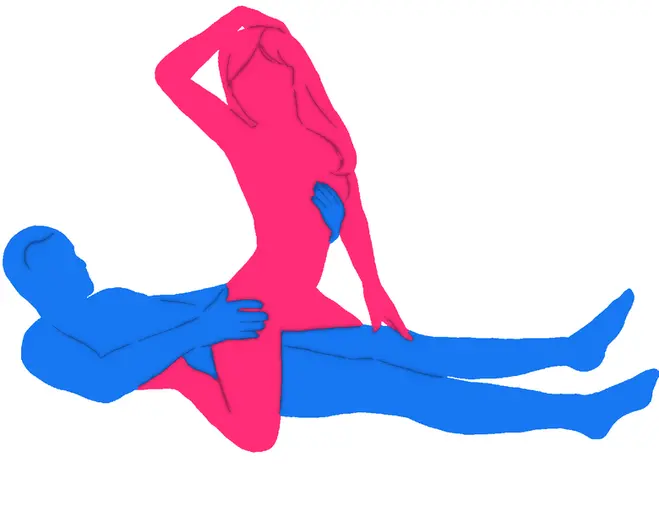
The Reverse Cowgirl
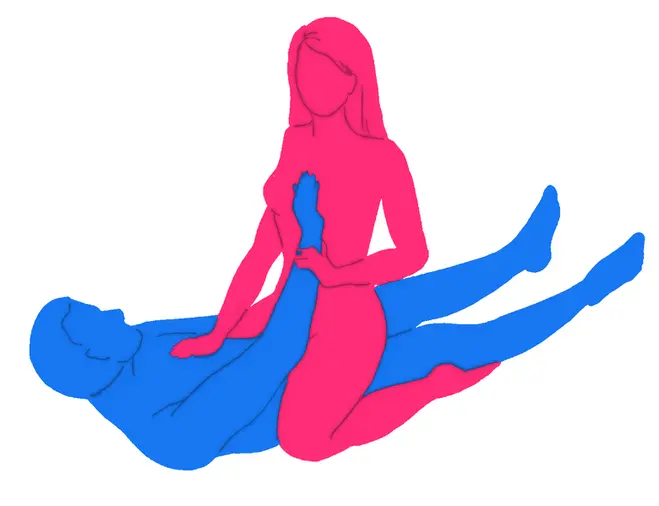
The Cowgirl

The Mill

Look to the Sky

The Rhythm Lady

Venus's Anvil

Wild Filly

Deep Ebony

The Promise
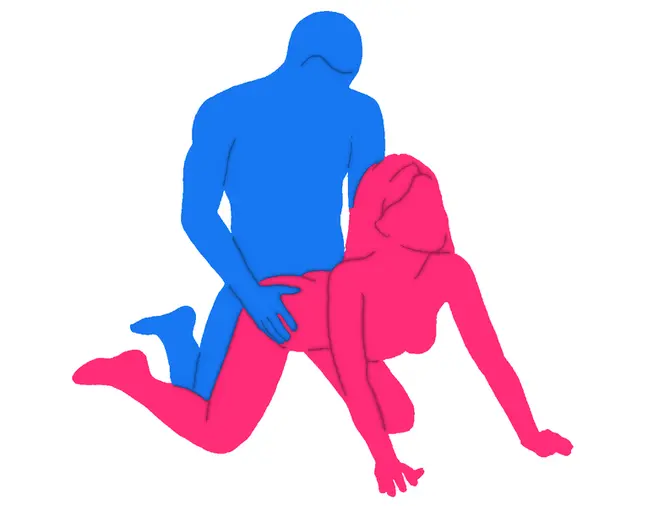
The Doggy Style
The Hammock
