

Anatomy and biomechanics
In this position, the receptive person sits astride the penetrating person, with legs bent and feet resting on the floor or the bed. Penetration is adjusted through hip movements, and height can be modified with pillows or the edge of the bed for greater comfort.
Why this position works
The Dance is appreciated for its capacity for emotional and physical connection. Facial proximity and body contact allow for greater intimacy and communication during sexual intercourse.
The Dance: Intimate and connected sexual position
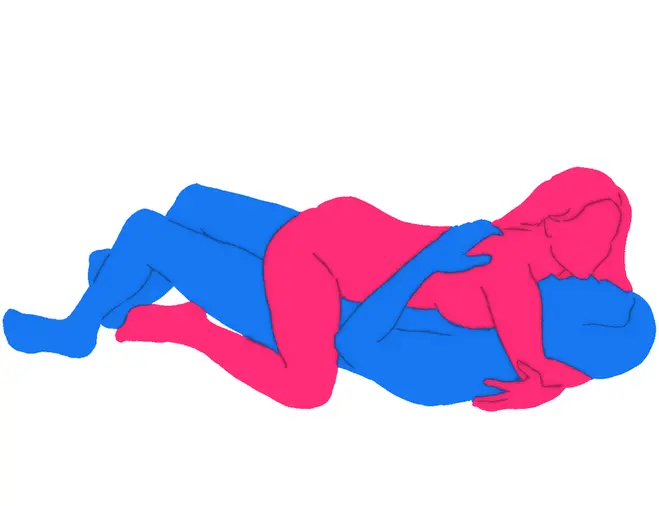
The Dance is a sexual position where bodies are arranged astride, face-to-face, with her on top. This position allows for medium penetration and facilitates eye contact and physical touch, increasing intimacy and connection between partners.
Also known as: Ball / Front-mounted / Face to face
Variations of this position
The Slow Dance: Gentle and Controlled Movements
In this variant, movements are slower and more controlled, allowing for greater sensitivity and connection.
- The receiving person sits astride the penetrating person, with legs bent and feet flat on the floor.
- Initiate gentle, circular movements with the hips, adjusting the rhythm and depth according to both partners' pleasure.
- Maintain eye contact and communicate any necessary adjustments to increase comfort and pleasure.
The Quickie: Energetic and dynamic movements
This variant involves faster and more energetic movements, increasing the intensity of pleasure.
- The receiving person sits astride the penetrating person, with legs bent and feet on the floor.
- Initiate quick and energetic movements with the hips, adjusting the rhythm and depth according to both parties' pleasure.
- Maintain constant communication to ensure both are comfortable and enjoying the experience.
The Leaning Dance: Greater depth and angle
In this variation, the receiving partner leans forward, allowing for greater depth and a different angle of penetration.
- The receiving partner sits astride the penetrating partner, with legs bent and feet on the floor.
- Lean forward, placing your hands on your partner's shoulders or chest, to change the angle of penetration.
- Move your hips in circular motions or back and forth, adjusting the rhythm and depth according to both partners' pleasure.
✓ Tips
- Adjust the height and supports to maintain comfort and stability.
- Maintain constant communication with your partner to adjust the depth and rhythm.
- Avoid forcing joints; use pillows if necessary to reduce pressure.
- Don't forget about lubrication for more comfortable and pleasurable penetration.
Key facts
- Interaction type
- Vaginal sex
- Active anatomy
- Penis
- Receptive anatomy
- Vagina
- Main stimulation
- Clitoris and G-spot
- Setups and participants
- Couple · 2 people Hetero
Frequently asked questions
Is this position suitable for beginners?
Yes, it is a suitable position for beginners due to its ease of execution and the ability to control the depth of penetration.
How can I increase the intensity of pleasure?
Increase the intensity of pleasure by moving the hips in circles or adjusting the angle of penetration to stimulate different erogenous zones.
Is it possible to perform this position without penetration?
Yes, you can adapt the position to perform rubbing or manual stimulation without penetration, maintaining intimacy and connection.
Safety and evidence
Scientific context for common terms used on this page. Keeping these terms makes the content easier to understand; the sources clarify what is established and what remains uncertain.
G-spot: what the evidence says
“G-spot” is a widely used term for a sensitive area of the anterior vaginal wall. Scientific literature has not established a discrete anatomical structure with an agreed location, size and nature; sensitivity and response can vary between individuals.
Last editorial review:
Related sex positions
Watering can

Frog Style

The Lovers' Dance

Princess Elevated

Crouching Tiger

The Pleasure Generator

Tangle

The Arch

Navigator

Vulgar Chair

Reverse Cowgirl
